
Stair nosings play a critical role in reducing slips, trips, and falls across a wide range of built environments. In Australia, their design and installation are governed by a combination of the National Construction Code (NCC) and several key Australian Standards, particularly AS 1428.1, AS 4586, and AS 1657. Understanding how these requirements interact is essential for architects, builders, and facility managers responsible for delivering compliant and safe stair systems.
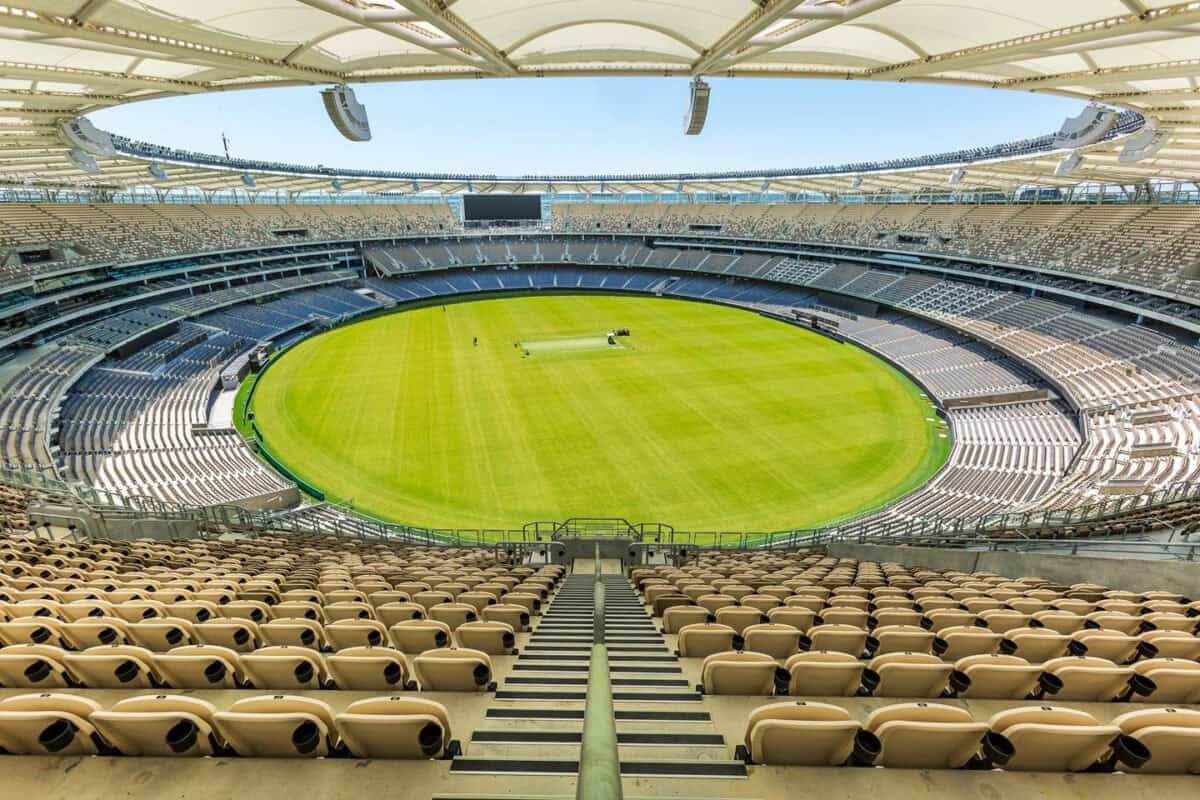
The NCC sets the overarching performance requirements for safe movement within buildings. It mandates that stairways must be designed to minimise the risk of slipping and clearly defines requirements for visibility and accessibility.
For stair nosings, the NCC references:
Visibility requirements through luminance contrast
Slip resistance expectations through referenced standards
Consistency and uniformity of stair geometry
The NCC is performance based, meaning compliance can be achieved through:
Deemed-to-Satisfy provisions, typically referencing AS 1428.1
Performance Solutions supported by evidence such as testing and risk assessments
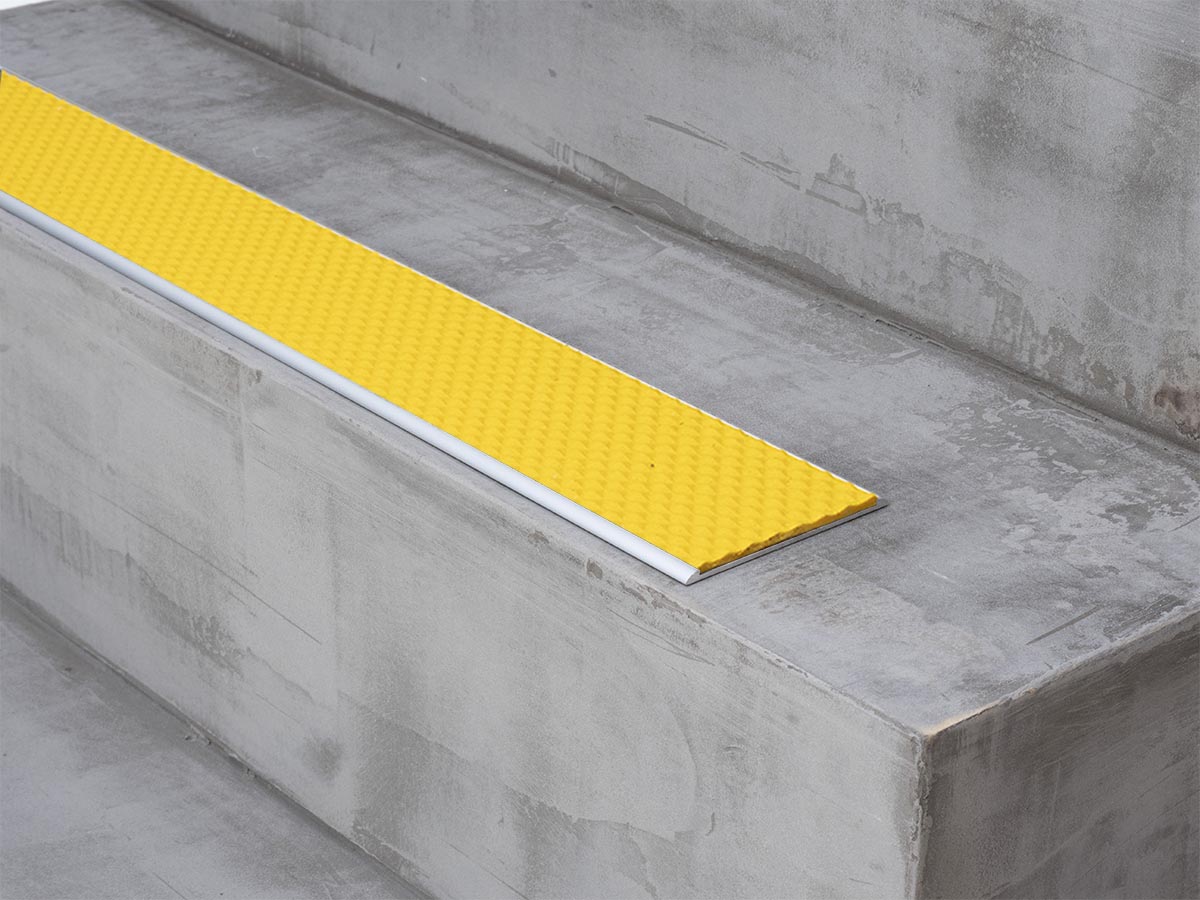
AS 4586 provides the framework for testing and classifying slip resistance of pedestrian surfaces.
Wet Pendulum Test (P rating)
Oil-Wet Inclining Platform (R rating)
Indoor stairs: often P3 or higher
External or wet areas: typically P4 or P5
The required rating depends on the environment:
Exposure to water or contaminants
Foot traffic volume
Likelihood of spills or wear
Slip resistance must be maintained over time, not just at installation. Tredsafe’s DiamondTred insert achieves a P4 slip resistance, and actually gets more slip resistant with time thanks to the industrial sand which is infused throughout the material.
AS 1428.1 is the primary standard governing stair nosings in public access environments. It ensures stairs are usable by people with disabilities, particularly those with low vision.
Minimum 30% luminance contrast between the nosing and the stair tread
The contrast strip must be clearly distinguishable under typical lighting conditions
This is critical for depth perception and edge detection
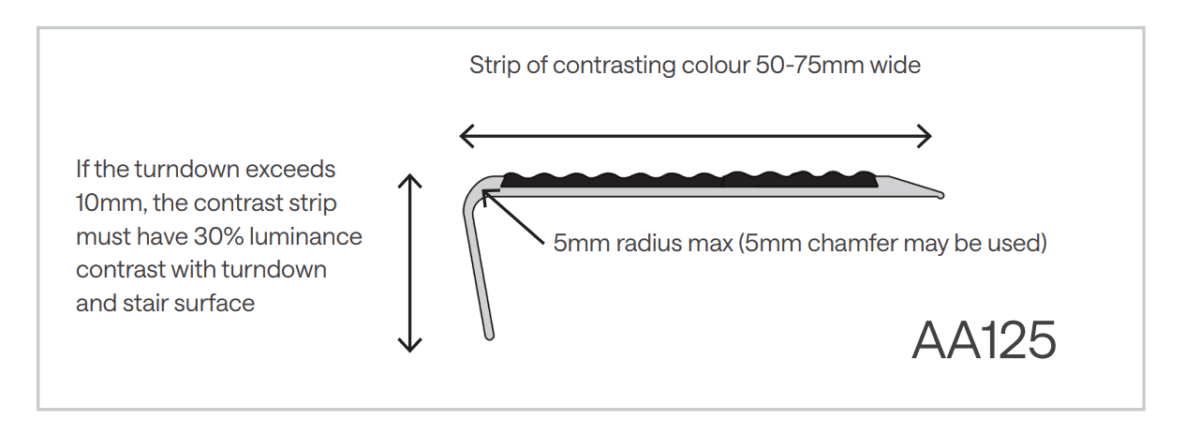
Typically 50 mm to 75 mm deep
Must extend across the full width of the stair
Positioned on the leading edge of the tread
Nosings must not create trip hazards
Bullnose or rounded profiles are acceptable if they maintain visibility and slip resistance
The strip should be located consistently across all steps
The turndown (drop of the profile on the stair riser) must not exceed 10mm. If greater than 10mm, the contrast strip must have 30% luminance contrast with the turndown AND stair surface
These requirements are mandatory in most public, commercial, and multi-residential buildings. Tredsafe meets all these requirements with various stair nosings available with different insert widths from 50mm to 63mm. Plus with availability of 20+ colours, contrast requirements can always be met. We have developed a handy LRV calculator so you can check the contrast percentage of your flooring with the different DiamondTred inserts.
AS 1657 applies to industrial environments such as factories, warehouses, and plant rooms.
Compared to AS 1428.1, the focus shifts toward:
Durability and robustness
High slip resistance under harsh conditions
Resistance to chemicals, oils, and heavy wear
Key considerations:
Higher slip resistance ratings are typically required
Metal or abrasive nosings are common
Visibility is important but often secondary to grip performance
By aligning product selection, installation practices, and maintenance strategies with NCC and relevant Australian Standards, stakeholders can ensure that stair nosings not only meet compliance requirements but also deliver long-term safety and reliability in real-world conditions.
To see the Tredsafe products for yourself, get in contact with your nearest Australian distributor